2 نوفمبر 2026
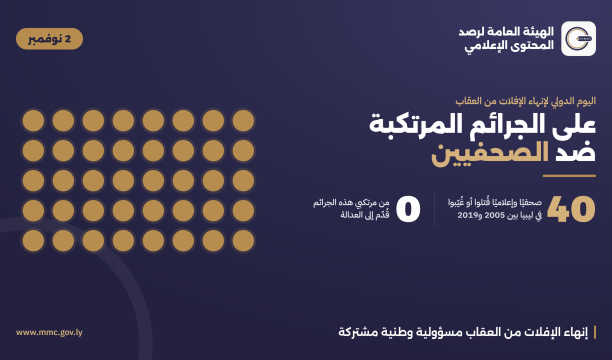
يصادف اليوم، الثاني من نوفمبر، اليوم الدولي لإنهاء الإفلات من العقاب على الجرائم المرتكبة ضد الصحفيين. وفي هذا اليوم نسأل سؤالاً واحدًا: من حاسب قتلة الصحفيين في ليبيا؟
بين عامي 2005 و2019، قُتل أو غُيب في ليبيا أربعون صحفيًا وإعلاميًا. ولم يُقدم أحد من مرتكبي هذه الجرائم إلى العدالة حتى اليوم.
عملنا في الهيئة قرابة عامين، مع المنظمة الليبية للإعلام المستقل، على حصر هذه الحالات. تحققنا من كل حالة، وتواصلنا مع أسر الضحايا، حتى أعددنا أول قائمة رسمية موثقة في ليبيا.
ولم نكتفِ بالتوثيق. درّبنا الصحفيين على السلامة الجسدية والرقمية وعلى حقوقهم القانونية، ووقّعنا خارطة الطريق العربية لسلامة الصحفيين، وطالبنا في كل مناسبة بقانون يحميهم.
سلمنا الحصر إلى منظمة اليونسكو، وإلى مكتب النائب وما زلنا ننتظر مستجدات التحقيق في هذه القضايا.
نناشد مجلس النواب إصدار قانون للإعلام يحمي الصحفيين ويشدد العقوبة على من يعتدي عليهم.
ونناشد السلطات القضائية إعادة فتح هذه الملفات، فجرائم القتل والإخفاء القسري لا تسقط بالتقادم.
كما نناشد الحكومة إنشاء آلية وطنية لسلامة الصحفيين.
إنهاء الإفلات من العقاب مسؤوليتنا جميعًا.
يمكنكم مشاهدة كلمة رئيس الهيئة كاملة على منصتنا في اليوتيوب: https://youtu.be/Tt1GxFzbFTY
Statement by the Head of the General Authority for Media Content Monitoring on the International Day to End Impunity for Crimes against Journalists
2 November 2026
Today, 2 November, is the International Day to End Impunity for Crimes against Journalists. On this day, we ask one question: who has held the killers of journalists in Libya to account?
Between 2005 and 2019, forty journalists and media workers were killed or disappeared in Libya. To this day, none of those responsible has been brought to justice.
For nearly two years, the Authority worked with the Libyan Organization for Independent Media to document these cases. We verified each case and contacted the victims’ families, and from this work we produced Libya’s first official documented list.
We went beyond documentation. We trained journalists in physical and digital safety and in their legal rights. We signed the Arab Roadmap for the Safety of Journalists, and we have called for a law to protect journalists at every opportunity.
We have submitted this documentation to UNESCO and to the Office of the Attorney General, and we are still waiting for updates on the investigations into these cases.
We call on the House of Representatives to pass a media law that protects journalists and imposes harsher penalties on anyone who attacks them.
We call on the judicial authorities to reopen these files, because crimes of murder and enforced disappearance are not subject to a statute of limitations.
We also call on the government to establish a national mechanism for the safety of journalists.
Ending impunity is a responsibility we all share.